Data pulled from the three biggest 2025–2026 allowance surveys: Greenlight (7M families), RoosterMoney Pocket Money Index, and Till Financial. Use the rule of thumb: roughly $1 per year of age, per week — then adjust.
| Age | Weekly average (US) | What kids spend it on | Money skill they're learning |
|---|---|---|---|
| 5 | $3.50 – $5 | Stickers, gumballs, small toys, ice cream | Counting coins, "if I buy this, it's gone" |
| 7 | $5 – $7 | Pokémon cards, slime, small Lego sets, snacks | Saving 2–3 weeks for something bigger |
| 10 | $7 – $10 | Roblox/Fortnite skins, books, gifts for friends | Splitting into Save / Spend / Give jars |
| 13 | $12 – $18 | Streaming top-ups, makeup, hanging out with friends | Budgeting across a month, opportunity cost |
| 16 | $20 – $43.50 | Gas, dates, clothes, phone bill, first savings goals | Earning vs. allowance, taxes, long-term saving |
Sources: Greenlight 2025 Allowance Report, RoosterMoney Pocket Money Index 2025, Till Financial U.S. averages 2025–2026.
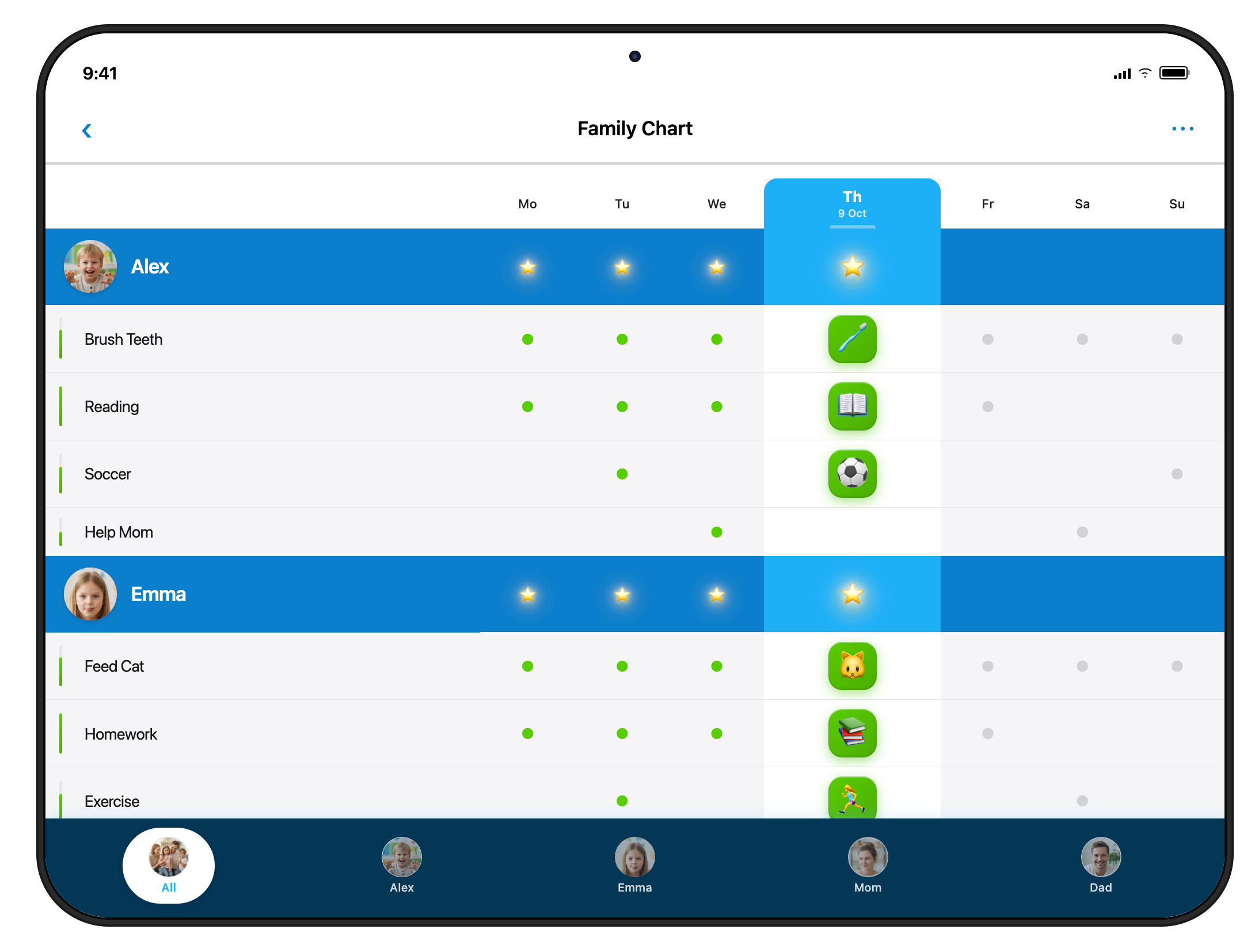
Hand-written charts get lost. Cash gets spent before they remember the goal. The app keeps the score so you don't have to.
Set a weekly amount per kid. The app pays it out on a schedule — but only if the week's required tasks are checked off. No more Sunday-night negotiations.
A Lego set. A Nintendo Switch. A bike. Kids see exactly how many weeks until they get there — which turns "I want it NOW" into "I'll have it in 6 weeks."
Set your own prices: "1 hour screen time = $2", "pizza night = $10", "movie pick = $5". They learn that fun stuff has a cost, and they pay for it themselves.
Pick a flat weekly allowance based on age (use the table above). Add a few "bonus" paid tasks for above-and-beyond work.
They mark tasks done in the app. You get a notification. Approve with one tap — or send it back if it's a half-effort job.
Cash, Venmo, or keep it as a digital balance in the app toward a savings goal. Kids see the number grow week by week.
Real reviews from parents using Family Checklist to run allowance, chores, and savings goals.
"The morning chore-battle is just… gone. He checks his list on the iPad, knows that brushing teeth is free but feeding the dog is $1, and goes. I haven't said 'go brush your teeth' in three weeks."
"My son used to think money came from the ATM. Now he asks 'how many weeks of allowance is that?' before he asks for anything. Best $0 I've ever spent on a parenting tool."
"She wanted AirPods. I said save up. The app showed her it would take 11 weeks. She did it in 9 by doing extra car-washes. When she bought them she treated them like gold. That was the whole point."
The questions parents actually ask — answered with 2026 data and expert consensus.
The 2025–2026 surveys from Greenlight, RoosterMoney, and Till Financial put the U.S. average weekly allowance at about $13.15, with a median of $10. The rule of thumb most families follow: roughly $1 per year of age, per week. So $5 at age 5, $10 at age 10, $13 at age 13.
Most 2026 child-development experts (Dr. Becky Kennedy among them) recommend a hybrid: a flat baseline allowance not tied to basic chores (those are family contributions), plus extra pay for bigger jobs — washing the car, mowing the lawn, deep-cleaning a room. This avoids the "I won't help unless I'm paid" trap while still teaching that effort = money.
Around age 5–6, when kids can count coins and understand "mine." Start small ($3–$5 a week) and pair it with a clear jar or app so they can SEE the money grow. Before age 5, points and stickers work better than dollars — the abstract value of money hasn't clicked yet.
Under age 8, give cash at least half the time — kids need to feel money to understand it. From age 9+, a digital tracker (like Family Checklist) helps with saving goals, balance tracking, and category budgeting. The app + cash combo is what most 2026 financial educators recommend.
Let them. A $5 candy mistake at age 7 is a $50,000 lesson they won't repeat at age 27. Don't bail them out when the money's gone before payday. That's the whole point — natural consequences in a low-stakes environment. The cheap lessons now prevent the expensive ones later.
The companion guide — which chores match which age, and the science behind why.
If you're just starting allowance with a kindergartener — start here.
Including Ramit Sethi and Dr. Becky Kennedy on raising money-smart kids.