The Science of Modeling: Why Children Copy What You Do, Not What You Say
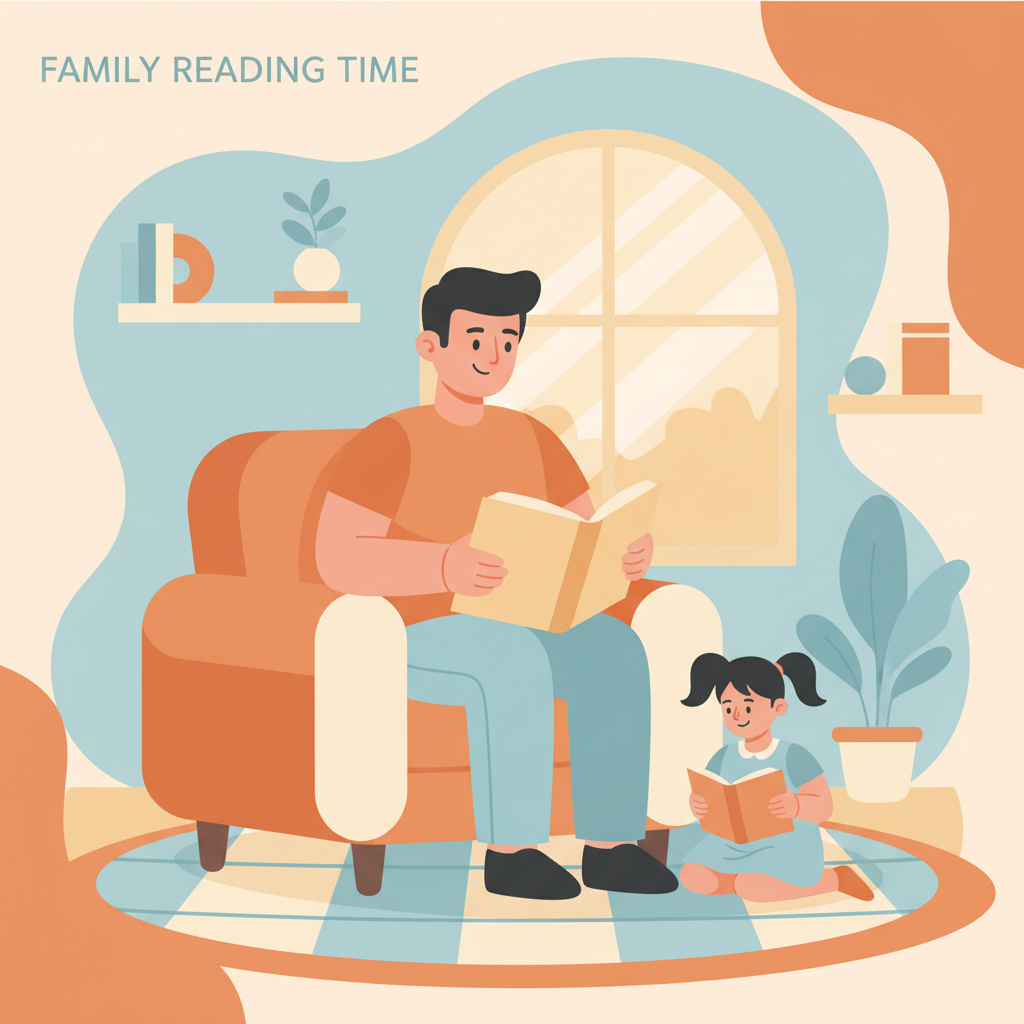
You tell your child to put their phone down at dinner. Then you check your email. You ask them to be patient. Then you honk at traffic. You want them to read more. But they have never seen you pick up a book. This disconnect is not hypocrisy—it is human nature. And understanding it can transform how you parent.
2,000 Hours of Observation
A child spends approximately 2,000 hours per year with their parents during the formative years (ages 3-12). During this time, they are not just passively existing in your presence. They are actively studying you—how you react to stress, how you treat others, how you spend your time, what you prioritize.
A longitudinal study published in the Journal of Family Psychology followed 586 families over 14 years. The researchers found that parental modeling was a stronger predictor of children's behavior than direct instruction, rules, or discipline. Children of parents who exercised regularly were 5.8 times more likely to exercise as teenagers—regardless of what the parents said about the importance of exercise.
The disconnect between what we say and what we do creates what psychologists call cognitive dissonance in children. When you tell them one thing but demonstrate another, they almost always follow what you do. Why? Because actions provide more reliable information about what is actually important, safe, and rewarding.
"Children have never been very good at listening to their elders, but they have never failed to imitate them." — James Baldwin
The Bobo Doll Experiment
In 1961, psychologist Albert Bandura conducted one of the most influential experiments in psychology. He divided 72 children (ages 3-6) into groups. One group watched an adult aggressively punch and kick an inflatable "Bobo" doll. Another watched an adult play calmly. A third saw no adult at all.
When later placed alone in a room with the same doll, the results were striking: children who observed aggression were far more likely to reproduce the exact same aggressive behaviors—including specific phrases the adult had used. They needed no instruction, no reward, no practice. Mere observation was enough.
This became the foundation of Social Learning Theory—the idea that humans learn primarily by watching others.
"Most human behavior is learned observationally through modeling: from observing others, one forms an idea of how new behaviors are performed, and on later occasions this coded information serves as a guide for action." — Albert Bandura, Social Learning Theory (1977)
What Children Actually Copy
It goes far beyond specific actions. Research shows children absorb entire patterns of thinking, feeling, and relating:
Emotional regulation. How you handle frustration becomes their template. A study in Developmental Psychology found that children of mothers with healthy emotional regulation had significantly better self-control by age 5. When you react to stress with yelling or withdrawal, you program their stress response. When you model calm problem-solving, you teach them coping.
Work ethic and persistence. Do you give up when things are hard, or push through? Research from Brigham Young University found children who observed parents persisting through difficulties showed more "grit" in their own activities—regardless of what parents said about perseverance.
Self-talk. When you make a mistake, do you say "I'm so stupid" or "That didn't work, let me try differently"? Your self-talk becomes their internal voice. Carol Dweck's research shows children adopt fixed or growth mindsets largely from what they hear parents say about themselves.
The Three Modeling Mistakes
Even well-intentioned parents fall into these traps:
The Martyr Model
Doing chores while sighing and complaining teaches children that responsibility equals suffering. Instead, model neutral emotion: "I like how clean the kitchen feels when the counter is wiped."
The Invisible Model
Doing important work after kids are asleep makes them think things "just happen." Make invisible work visible: "I'm paying our bills now. This is how we keep the electricity on."
The "Do As I Say" Model
Setting rules you don't follow ("No phones at dinner" while you check yours) teaches that rules are for children only. Apply rules to yourself first. When you slip, acknowledge it openly.
What Actually Works
Four strategies backed by research:
1. Narrate your actions. Think out loud when doing something you want them to learn: "I'm putting my keys in the bowl so I can find them tomorrow." This moves behavior from invisible to intentional.
2. Do habits in parallel. Brush teeth together. Tidy up at the same time. Read in the same room. This creates solidarity and activates learning more powerfully than assigned tasks.
3. Model the recovery. When you make a mistake, turn it into a teaching moment: "I snapped at you earlier, and that wasn't okay. I was stressed, but that's not an excuse. I'm sorry." This teaches repair and growth mindset.
4. Make your checklist visible. Let children see you working on yourself. When they notice you checking off "Exercise" or "Read 20 mins," it normalizes self-improvement as a lifelong journey—not something adults impose on children.
The Sunday Setup
Once a week, sit down with your child and set goals together. Frame it as a family growth project:
"I want to get better at drinking water and reading more. I'm putting those on my list. What do you want to work on?"
By making self-improvement a shared activity, you stop being the enforcer and start being the leader.
The Bottom Line
Your child is watching you right now, recording everything. They are not waiting for your lectures or your rules. They are studying your actions—2,000 hours a year of observation, processing, and imitation.
The question is not whether they will copy you. They will. The question is: what are you modeling?
Related Articles
Ready to lead by example?
Family Checklist lets you track habits alongside your children—so they see that growth is a lifelong journey.
Get Early Access