Visuals vs. Voice: Why Your Child Ignores "Clean Your Room"
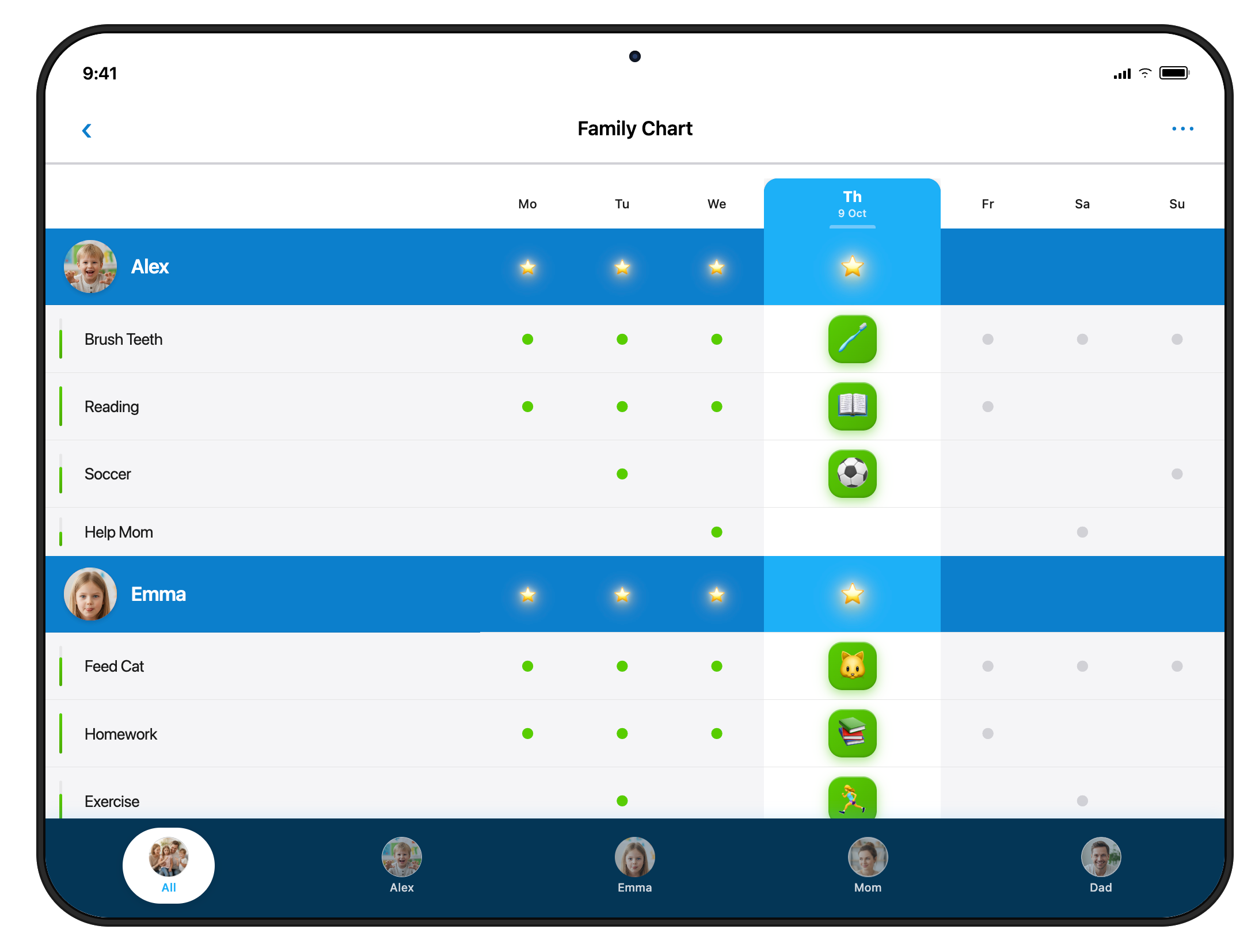
"Put your shoes on." Silence. "Put your shoes on." Nothing. "I said, PUT YOUR SHOES ON!" If this sequence sounds familiar, the problem might not be defiance. It might be your delivery method.
Why Verbal Commands Fail
Verbal instructions are transient—they exist for a second and then vanish. For a child with a still-developing working memory, holding onto a spoken command while navigating a distraction-filled room is genuinely difficult.
According to Cognitive Load Theory, developed by educational psychologist John Sweller, working memory has strict limits. Children can typically hold 3-4 items in working memory at once. Adults can hold about 7 (the famous "Miller's Law").
Think of your child's working memory like a small cup. Every instruction adds liquid:
"Go upstairs" (splash), "Brush your teeth" (splash), "Put on pajamas" (splash), "Bring down your laundry" (overflow).
When the cup overflows, they shut down. They might do the first thing and forget the rest, or stand there looking confused. This is not defiance—it is cognitive overload.
The Visual Advantage
A visual checklist does something a voice cannot: it persists. The information stays available so their brain does not have to hold it.
When you say "Get ready for school," you are actually asking your child to perform a complex chain: Brush teeth → Wash face → Get dressed → Pack bag → Put on shoes.
Without a visual aid, they must hold that entire sequence in working memory. With a checklist, they only need to focus on one thing at a time. The cognitive load drops dramatically.
"Visual schedules reduce anxiety by making expectations clear and predictable. They transfer the 'nagging' from the parent to the list." — Understood.org
Reducing the "Nag Factor"
The best part about switching to visuals: it protects your relationship. Instead of being the "bad cop" constantly barking orders, you point to the list:
"What does the checklist say is next?"
This shifts authority to the system. You become a helper, not a boss. The checklist is the boss. And unlike a parent, the checklist never gets frustrated, never raises its voice, and never forgets.
Designing an Effective Visual Schedule
- Use icons, not just text. Even for children who can read, images are processed faster. A picture of a toothbrush triggers action more quickly than the word "Toothbrush."
- Break it down. "Clean room" is too vague. Try: "Pick up clothes," "Put away toys," "Make bed."
- Limit the list. Start with 5 critical items for morning and 5 for evening. Add more only after those are mastered.
- Make checking satisfying. The physical act of checking a box—or hearing a satisfying "ding"—provides the dopamine hit that motivates the next task.
When They Still Resist
What if your child refuses to look at the list?
1. Involve them in creation. Do not make the list for them; make it with them. "What do you think is the first thing we should do in the morning?" Ownership increases buy-in.
2. Connect to privileges. "Once the morning checklist is complete, the iPad unlocks." This is not bribery—it is the Premack Principle (do the less preferred activity to unlock the more preferred one). It is how the adult world works.
3. Check the environment. Is the TV on? Is there too much noise? Sometimes "defiance" is actually sensory overload. A calm environment plus a visual checklist cuts through the chaos.
The Bottom Line
Your child is not ignoring you to be difficult. Their working memory is limited, and verbal commands vanish instantly. A persistent visual system—a checklist on the fridge, an app on their device—offloads the cognitive burden and lets them succeed.
Stop repeating yourself. Start showing them what comes next.
Related Articles
Stop nagging. Start showing.
Create your child's first visual routine with Family Checklist.
Get Early Access