Hybrid Parenting Mid-2026 Update: What 6 Months Actually Proved
Six months ago, hybrid parenting was a prediction. As of June 2026 it is the default. Only 38% of Gen Z parents still use gentle parenting exclusively, 79% of parents now reach for AI tools weekly, and the American Academy of Pediatrics quietly rewrote its screen-time guidance in February to favor context over rules. The January 2026 forecast called the shift "balance over rules." Half a year of data shows it went further than that—families didn't just rebalance philosophies, they swapped philosophies for systems. Here is what actually held up, what didn't, and what changed in our own house between February and June.
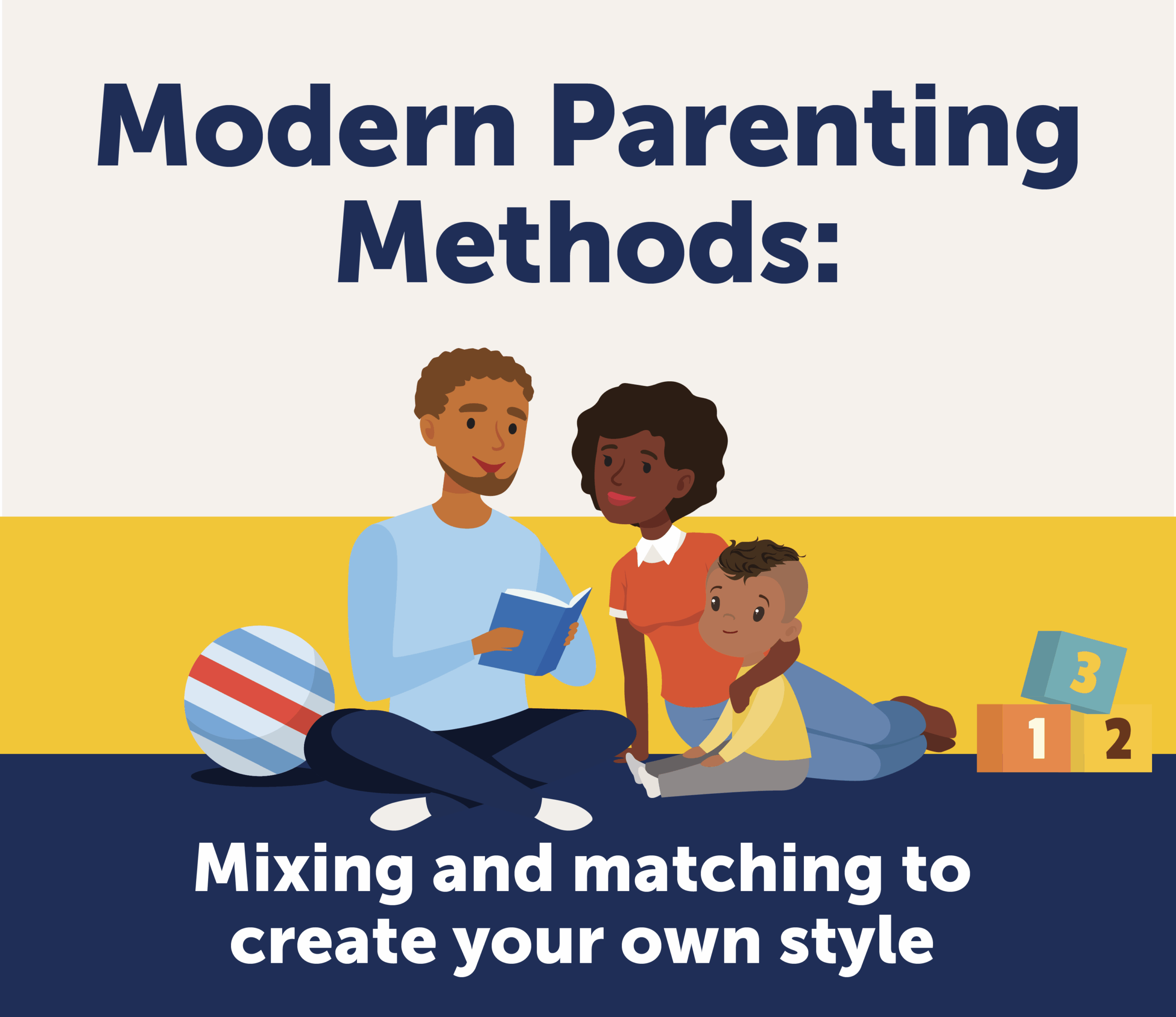
The Gentle Parenting Problem
Let me be clear: the core ideas behind gentle parenting are solid. Empathy matters. Emotional validation matters. Not screaming at your kids matters. Nobody is arguing against that.
But somewhere between the Instagram carousels and the TikTok scripts, gentle parenting became something different in practice than what it was supposed to be in theory. For a lot of families—mine included—it quietly collapsed into permissive parenting.
David Bruce, a registered psychotherapist, put it bluntly: "Somewhere along the way, gentle parenting got confused with permissive parenting, leading to poor boundary development in social settings."
That sentence hit me hard, because I'd seen it play out in my own house. I was so focused on being the empathetic, understanding parent that I stopped being the parent who holds the line. My son learned that if he pushed back on anything—chores, bedtime, screen limits—I'd eventually negotiate. Not because I wanted to, but because I'd been trained to believe that enforcing a boundary was somehow harsh.
And then there's the "iPad kid" phenomenon. We've all seen it, and most of us have been guilty of it at some point. The screen becomes a conflict-avoidance tool. The child is upset? Here's the tablet. The child doesn't want to do their homework? Let them finish the episode first. It's not malicious—it's exhausted parents choosing the path of least resistance because they've been told that creating friction is bad parenting.
But friction is where growth happens. And many of us forgot that.
The Numbers Tell the Story
This isn't just my experience. The shift away from pure gentle parenting is measurable and widespread.
A recent survey by Kiddie Academy (conducted by Talker Research) found some numbers that tell the story clearly:
- Only 38% of Gen Z parents now use gentle parenting exclusively. Just a couple of years ago, it dominated the conversation. Now it's a minority approach.
- 80% of parents blend an average of 3 different parenting styles. Most families aren't following a single philosophy anymore—they're mixing and matching based on what works.
- 85% agree there's no one-size-fits-all approach to raising kids. That's not a wishy-washy cop-out—that's hard-won wisdom.
Think about that 80% number for a second. Four out of five parents are already doing hybrid parenting, whether they call it that or not. The label is new. The practice isn't.
The Shift in Numbers
- 38% of Gen Z parents still use gentle parenting exclusively
- 80% blend 3+ different parenting styles
- 41% identify cycle-breaking as their primary approach
- 37% focus on healing generational trauma
- 85% agree no single approach works for every family
What Hybrid Parenting Actually Looks Like
Hybrid parenting isn't a new rulebook. It's the absence of a single rulebook. It's parents finally giving themselves permission to use what works and drop what doesn't, regardless of which parenting influencer said what.
In practice, here's what I've seen it look like in our home and in conversations with other parents:
Empathy and boundaries coexist. You can say "I understand you're frustrated" and also say "but you still need to do your homework before screen time." These are not contradictory statements. For years, the messaging made it feel like they were. They're not. A child can feel heard and still have a non-negotiable boundary.
Consequences are real, but they're not punishments. There's a difference between "you didn't clean your room so no dinner" (punishment) and "you didn't finish your chores so we don't have time for the park today" (natural consequence). Hybrid parenting leans heavily into the second. Kids learn cause and effect without feeling attacked.
Structure that kids can see and rely on. This is the big one for me. Kids thrive on predictability. When the expectations are clear, visible, and consistent, there's less anxiety for everyone. The rules aren't arbitrary—they're part of a system the whole family can see.
Parents as participants, not just enforcers. One of the things that stuck with me from our two months using a printed checklist was this: when I put myself on the chart, the whole dynamic changed. I wasn't the authority handing down rules. I was another person with responsibilities. That shift matters more than any parenting philosophy.
Cycle-Breaking: The Biggest Shift Nobody's Talking About
Here's the number from the Kiddie Academy survey that surprised me most: 41% of Gen Z parents identify "cycle-breaking" as their primary parenting approach—making it the single most popular style, ahead of gentle parenting at 32%.
And 37% say they're actively focused on healing generational trauma in how they raise their kids.
This is huge. What it means in practice is that the largest group of new parents isn't following a parenting brand or an Instagram methodology. They're looking at how they were raised, identifying what hurt them, and deliberately choosing differently.
But here's the important nuance: cycle-breaking doesn't mean doing the opposite of what your parents did. If your parents were authoritarian, the opposite isn't permissive—it's something in between. The parents who get this right aren't swinging the pendulum to the other extreme. They're finding the middle.
Fix what was broken. Keep what worked. That's cycle-breaking at its best—not a rejection of everything your parents did, but a thoughtful edit.
I grew up in a household with clear rules and real consequences. Some of it was too harsh. Some of it was exactly right. The work for me has been separating those two categories and keeping the good parts while rewriting the rest. That's not gentle parenting. That's not authoritarian parenting. It's just... parenting with intention.
Structure Is the Missing Piece
Here's something I've noticed across all the conversations I've had with parents over the past year: the families who are making hybrid parenting work almost always have some form of visible structure in their home.
It doesn't have to be fancy. A printed checklist on the fridge. A whiteboard with the week's responsibilities. A chore chart the kids helped create. The format matters less than the visibility.
Why? Because structure removes the parent from the enforcer role. When the expectations are written down and everyone can see them, you're not the bad guy anymore. The chart is the authority. You're just another person on it.
This is something I discovered accidentally when building Family Checklist for my own family. I wrote about the first two months in detail, but the short version is: printing a weekly chart and taping it to the fridge eliminated most of our daily chore arguments. Not because the chart was magic, but because it made expectations visible and shared.
Tools like this are one piece of the puzzle. They won't fix everything. They won't replace real conversations or replace the hard work of being present. But they address a specific, practical problem: how do we make the rules visible so nobody has to be the enforcer all the time?
As The Bump noted in their overview of 2026 parenting trends, families are increasingly gravitating toward approaches that are sustainable, not performative. A printed checklist is about as un-performative as it gets. There's no aesthetic to it. It's just a piece of paper that works.
The Mid-Year Reality Check (6 Findings)
The January predictions held in some places, missed in others, and got blown past in two big ways. Here is the audit from six months in the trenches and six months of fresh data.
1. The gentle parenting collapse was not a blip. Kiddie Academy's 2025 survey put exclusive gentle parenting at just 38% of Gen Z parents, and that floor held through the first half of 2026 instead of recovering. The backlash to "gentle parenting exhaustion" is now its own measurable category. What this means for parents: you are not behind the curve if you stopped validating every meltdown—you are early on the curve.
2. AI quietly became a parenting co-pilot. A 2025 Menlo Ventures and Morning Consult survey found 79% of parents use AI tools compared with 54% of non-parents, and a February 2026 Pew Research study found 37% of parents with kids under 18 now think asking AI for parenting advice is a good idea. What this means for parents: AI is a useful sounding board for logistics and second opinions, but it is not a substitute for a pediatrician or therapist on safety or medical questions. The flip side — kids' own AI consumption — is the harder problem, covered in our summer 2026 screen time guide.
3. The AAP formally backed the hybrid shift in February. The American Academy of Pediatrics replaced its rigid screen-time limits with a "quality, context, conversation" framework in February 2026 updated guidance, recommending family media plans instead of fixed daily caps. What this means for parents: the official medical guidance now sounds like hybrid parenting—trust your context, write down your family's rules, stop measuring success in minutes.
4. Cycle-breaking outlived the trend cycle. The 41% of Gen Z parents who named cycle-breaking as their primary approach in early 2025 did not move on to a new label by mid-2026—it stayed the dominant style, ahead of gentle and authoritative parenting. What this means for parents: the question "what am I deliberately doing differently than my parents?" is more durable than any single methodology and worth revisiting on a calendar.
5. Structure tools beat philosophy debates. Digital wellness and family-organization app downloads grew 156% year over year in 2026 while engagement with pure parenting-content accounts on Instagram and TikTok flattened. Families voted for visible structure, not more advice. What this means for parents: a printed chart on the fridge or a shared app is doing more work than another podcast episode.
6. The "warm + structured" combo got new research backing. A February 2026 study in PLOS One found that parental psychological resilience predicts more authoritative parenting and more prosocial child behavior—while simultaneously reducing permissive and authoritarian patterns. What this means for parents: taking care of your own bandwidth is the single highest-leverage parenting move, because depleted parents default to extremes.
What This Means for Your Family
If you've been feeling stuck between "I don't want to be my parents" and "this gentle approach isn't working either," you're not alone. You're part of the 80%.
Here's what I'd tell you based on what I've learned, both from the research and from our own messy, imperfect experience:
You don't have to pick one style. The idea that you need a single parenting label is marketing, not science. Use empathy from gentle parenting. Use structure from authoritative parenting. Use natural consequences from whatever you want to call it. Nobody is grading your methodology.
Structure reduces conflict naturally. This is the most practical advice I can give. When expectations are visible—written on paper, posted on the wall, agreed upon in advance—there's less room for daily arguments. The structure does the enforcement. You get to be the parent, not the police.
Put yourself on the accountability chart too. Whatever system you use, include yourself. When your kids see that the rules apply to everyone—including you—the dynamic shifts from top-down authority to shared responsibility. Research on visual accountability backs this up: people follow through more when commitments are visible.
Less performative, more real. The era of performing parenting for social media is fading. The hybrid parenting movement is, at its core, parents giving themselves permission to be honest about what works and what doesn't. Your family doesn't need to look like anyone else's family. It just needs to function.
Putting Hybrid Parenting Into Practice
- Start with one visible structure—a printed chart, a whiteboard, anything the whole family can see daily
- Define 3-5 non-negotiable boundaries and be consistent about them, while staying flexible on everything else
- Include yourself in whatever accountability system you create for your kids
- Check in monthly: what's working? What's not? Adjust without guilt
- Stop comparing your family's approach to what you see online. The 85% know there's no single right way
Parenting in 2026 is less about labels and more about what actually works at 7 AM on a Tuesday when nobody wants to get dressed and the bus is in fifteen minutes. The gentle-parenting-to-hybrid shift isn't a failure—it's a correction. We tried something, we learned from it, and we're building something better.
That's not inconsistency. That's growth.
Related Articles
Try It With Your Family
Set up your family checklist in 5 minutes. Print it. Tape it to the fridge. See what happens.
Download Family Checklist