Consumer or Creator? Raising Kids in the Age of AI Slop (2026)
AI slop is everywhere. 40% of videos recommended to kids on YouTube are now machine-generated nonsense. Our kids are drowning in algorithmic content made by no one, for nothing. The fight isn't "screens vs. no screens" anymore. It's consumers vs. creators — and most kids are losing.
Here's the framing that actually works in 2026: every screen interaction is either consuming something made for you or creating something that didn't exist before. AI just blew the consuming side wide open. Infinite slop, zero effort, perfectly tuned to your kid's dopamine.
This piece gives you the framework, plus 3 questions to ask before your kid uses any AI tool and 5 tactics we use at home to keep our kids on the creator side of the line. No bans. No timers. No shame. Just a different lens.
The AI Slop Problem (2026 Edition)
"Slop" was named Word of the Year by Macquarie Dictionary, Merriam-Webster, and the American Dialect Society in December 2025. That's not coincidence — it's a diagnosis.
The numbers from this year alone:
- A March 2026 New York Times investigation found roughly 40% of videos recommended to children on YouTube and YouTube Kids are AI slop — oddly-proportioned horses hatching from eggs, fake "educational" channels, 10-hour zombifying livestreams designed for toddlers.
- 60% of US parents of kids under 2 say their child is a regular YouTube viewer. The under-2s are the prime audience for the worst of it.
- In April 2026, more than 200 child-advocacy groups signed an open letter demanding YouTube ban AI slop from its kids' platform entirely.
- Dr. Jenny Radesky (University of Michigan pediatrics) testified to the Senate Commerce Committee in January 2026 that AI companion apps may pose a greater risk to children than social media — hyper-real visuals stop young kids from telling fantasy from reality.
Why is this worse than passive TV? Three reasons. First, the volume is infinite — an AI can spawn a million videos overnight, none made by anyone who cares about your kid. Second, the optimization is brutal — algorithms test what holds eyeballs longest and breed more of it, like factory farming attention. Third, there's no author to learn from. A bad cartoon at least taught your kid that someone, somewhere, decided this should exist. Slop teaches them content is weather.
Meanwhile a 2025 University of Toronto study found college students' divergent-thinking scores have dropped 42% in five years. Researchers tracking GPT-tutored students found they scored 17% worse on subsequent non-AI exams. 92% of students used AI tools in 2025, up from 66% in 2024. The skill atrophy is measurable. The kids who outsource thinking now will not magically grow it back at 22.
The Question That Reframes Everything
Years before AI slop, I'd noticed something. I wasn't angry about screens. I was angry about what my kids were doing with them.
Scrolling Shorts for 40 minutes — that bothered me. But when my daughter edited a video she made, or my son figured out a redstone contraption in Minecraft — that was different. Same screen. Same time. Fundamentally different activity.
So I started asking one question:
"Right now — are you consuming or creating?"
No judgment. No "you should be doing something else." Just a mirror. It works better than any timer or ban I'd tried before — and it works even better now that AI has made the consuming side a black hole.
The Framework
It's embarrassingly simple. Every interaction with a screen (or anything, really) falls into one of two modes:
Two Modes of Screen Time
Consuming
- Watching YouTube/TikTok
- Scrolling feeds
- Playing games designed to hook you
- Reading without thinking
- Passive, input-only
Creating
- Making a video or photo
- Writing code or a story
- Building something in Minecraft
- Editing, designing, composing
- Active, output-producing
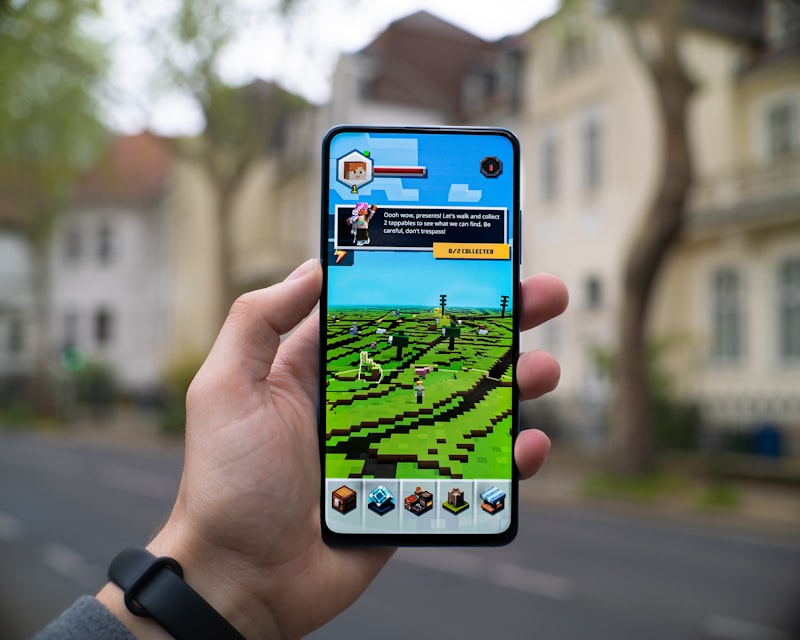
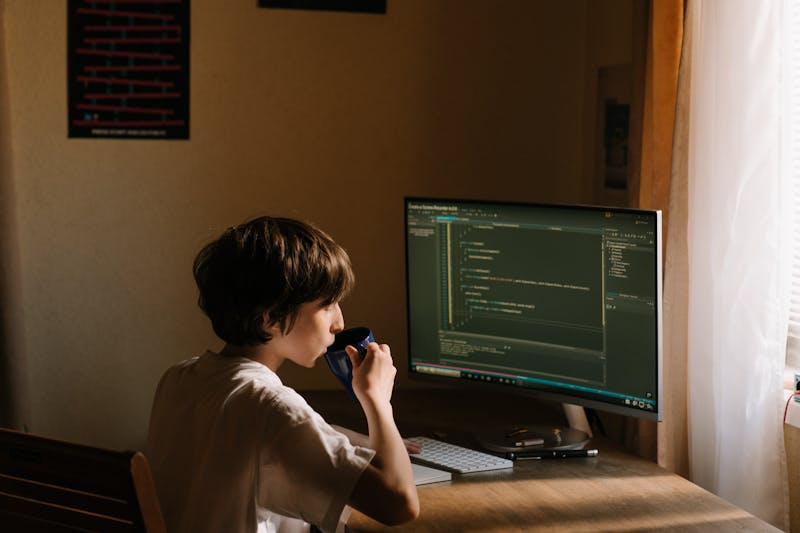
The line isn't always clean. Watching a tutorial on how to draw is consuming, but it's in service of creating. Playing a puzzle game is more active than scrolling a feed. Real life has gray areas.
But the framework works because kids get it instantly. They know the difference between zoning out on Shorts and working on something. They've just never had a word for it.
Why "Home Alone" Is the Perfect Example
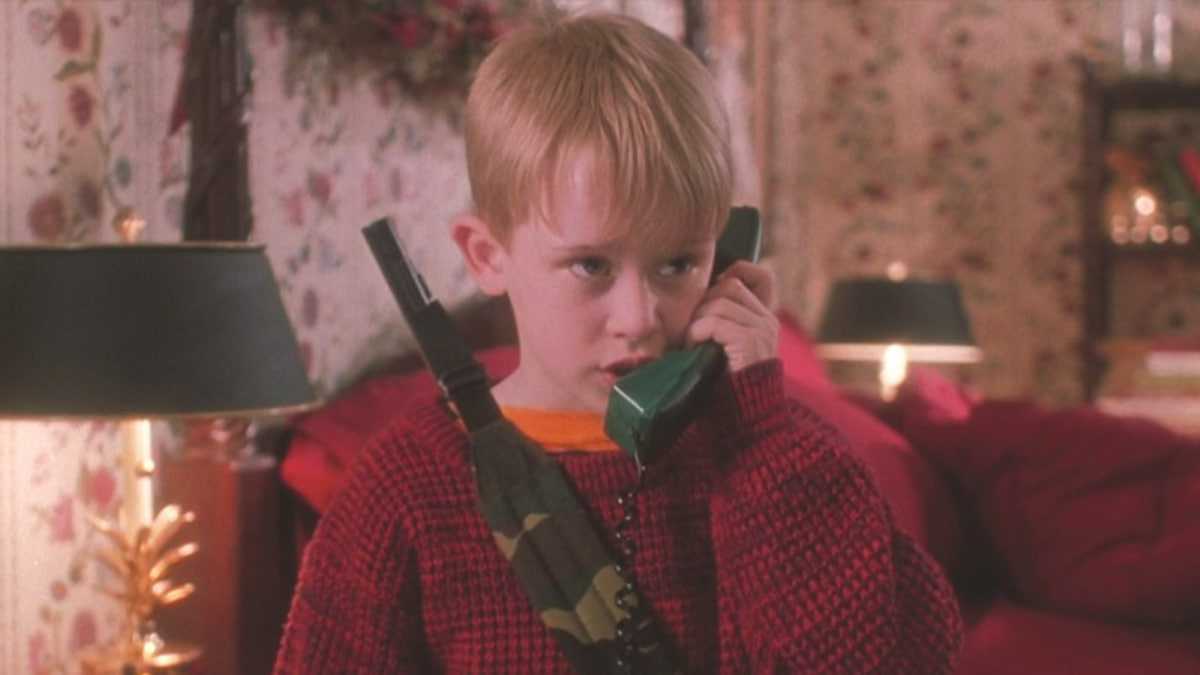
Think about Kevin McCallister. An 8-year-old left alone in a house, facing two adult burglars. What does he do?
He doesn't call for help (phone lines are cut). He doesn't hide (tried that, didn't work). He creates a system. He surveys his house, identifies resources—paint cans, toys, ice, a blowtorch—and builds an elaborate defense using what he has.
Kevin is a creator. He takes his environment and makes something from it. That's the mindset.
Now imagine a different Kevin—one who sits on the couch watching TV while the burglars come in. That's the consumer version. Same house, same resources, completely different outcome.
When I explained this to my kids, something clicked. They'd both seen the movie. They got it immediately.
How It Works in Practice
I don't use this as a rule. It's not "you must create for 2 hours before you can consume." That would kill it. It's a lens.
When my daughter is deep in an Instagram scroll, sometimes I just ask: "Consuming or creating right now?" She usually laughs, says "consuming," and sometimes—not always, but sometimes—switches to something else. The question works because it doesn't carry judgment. It's just a category.
What surprised me is that they started using it themselves. My son will say "I was consuming for a while, now I want to create something." My daughter started a sketchbook specifically because she wanted more "creator time."
The framework gave them a vocabulary for something they could feel but couldn't name.
3 Questions to Ask Before Your Kid Uses Any AI Tool
The consume/create line gets blurry with AI — especially when the tool can look like it's helping a kid create. These three questions cut through the fog. Run any AI use past them before you say yes.
Q1: Is this making something or consuming something?
The fastest filter. A kid using Suno to compose their own song is making. A kid watching AI-generated songs auto-play on YouTube is consuming. A kid writing a story and asking ChatGPT to suggest a better ending is making. A kid asking ChatGPT to "give me a 5th-grade book report on Charlotte's Web" is consuming — consuming the labor someone else's brain did to train that model.
Right answer scenario: "I'm using AI to generate concept art for the comic I'm drawing."
Wrong answer scenario: "I'm watching AI-generated 'true crime' shorts on TikTok."
Q2: Will my kid be able to do this without the AI in 6 months?
This is the skill-amplification test. If the answer is yes, the AI is a scaffold — great, use it. If the answer is no, the AI is a crutch, and the limb behind the crutch is going to atrophy. The Toronto data is unambiguous: tutored-by-GPT students scored 17% worse on no-AI follow-up exams. Crutches feel helpful in the moment and cost you the muscle.
Right answer scenario: "ChatGPT explained how long division works in a way my kid finally got — now she can do it on paper."
Wrong answer scenario: "ChatGPT writes her book reports. She has never written one alone and has a test next week."
Q3: Is this replacing a hard skill or amplifying a real one?
This is the most important question and the hardest one. Writing, drawing, reading carefully, sitting with boredom, thinking before speaking — these are hard skills, the kind that take years and feel bad while you're building them. AI is fastest at replacing exactly those. The good uses amplify a skill your kid already has the seed of. The bad ones replace a skill they haven't earned yet.
Right answer scenario: "He sketches by hand, then uses an AI tool to test color palettes — the drawing is still his."
Wrong answer scenario: "He has Midjourney generate the whole thing because 'drawing is too hard.'"
5 Tactics for Raising a Creator in 2026
The framework is the lens. These are the daily habits that bend a household away from slop and toward making.
1. The 1:3 Ratio Rule
For every three units of consumption, do one unit of creation. Watched 30 minutes of YouTube? Spend 10 making something. Read a comic? Draw one panel. The point isn't math — it's that consumption always carries a small creator tax. Kids stop noticing the tax after a week, and start noticing the projects piling up.
2. Make Your Own Friday
One night a week, no passive screens for the whole family — including parents. Anything goes as long as it produces a thing: cooking, music, drawing, Lego, writing, gardening, garage projects, even a written-down plan for a future trip. Our family does Friday. Pick the night that fits yours. The ritual matters more than the day.
3. AI as Assistant, Never Ghostwriter
Establish one house rule: AI can help you make your work better, but it cannot replace your work. ChatGPT can suggest words you didn't know, fix grammar, brainstorm ideas, explain a concept. It cannot submit the assignment, write the email to the teacher, or "just do" the homework. Kids absorb the rule fast when you apply it to yourself too — "I used Claude to outline this draft, but the writing is mine."
4. Boredom Is a Feature
The Anxious Generation movement — 52+ weeks on the NYT bestseller list — argues kids lost play-based childhood because every empty moment got filled by a phone. Algorithms cannot tolerate boredom; creators feed on it. Let your kid be bored. Don't rescue them with a device in the back seat of the car, in the waiting room, at the dinner table. The first ten minutes will look like suffering. The next ten are where ideas get made.
5. Visible Craft Daily
Something tangible they made should exist at the end of most days. A drawing pinned to the fridge. A code commit. A recipe they cooked. A garden they watered. A repaired bike. A page of a journal. It does not have to be good. It has to exist. Visible craft is the daily evidence a kid uses to define themselves — "I'm the kind of person who makes things" — and that identity is the strongest anti-slop force you can give them.
The Deeper Layer
Here's what I didn't expect: this isn't just about screens.
Once kids have the consumer/creator lens, they start applying it everywhere. Eating food someone made vs. cooking. Listening to music vs. playing an instrument. Reading a story vs. writing one. Being entertained vs. entertaining yourself.
It's not that consuming is bad. We all consume. I watch Netflix. I scroll Twitter. That's fine. The problem is when consuming is the only mode. When a kid (or adult) never switches to creating, something important atrophies.
Creating requires effort. It requires tolerating imperfection. It requires starting with nothing and making something exist that didn't before. That's a muscle. And like any muscle, it weakens without use.
What This Has to Do with Chores
This might seem unrelated to family checklists and chore charts, but it's the same principle underneath.
A kid who follows a checklist is in creator mode. They're taking action, producing a result, making their environment different. "Clean room" on a list isn't consuming—it's creating order from chaos. Completing a morning routine isn't passive—it's building a structure for the day.
The visual checklist works for the same reason the consumer/creator question works: it gives kids a concrete, visible way to see themselves as someone who does things, not someone things happen to.
Try It This Week
- Introduce the concept casually. Don't lecture. Next time your kid is on a screen, just ask: "Consuming or creating right now?" Let them answer.
- Apply it to yourself first. Kids copy what you do, not what you say. Mention it about your own screen time: "I've been consuming for an hour, I should go create something." See The Screen Time Crisis for what the 2026 research says about modeling.
- Don't make consuming the enemy. Everyone needs downtime. The goal is not zero consumption — it's awareness.
- Run the 3 questions before any AI tool. Especially homework help. Especially image generators. Especially chatbots. If you're new to AI parenting, our Hybrid Parenting 2026 guide goes deeper on what to allow and what to block.
- Celebrate creating. When they make something — a drawing, a video, a Minecraft build, a cooked meal — notice it. "That's creator mode right there."
- Read Haidt with your partner. If you haven't yet, The Anxious Generation is on our shortlist in 30 Best Parenting Books. It explains the why behind everything in this article.
No app will fix a kid's relationship with screens. No timer. No parental control. But a mental model they internalize and use themselves? That actually works. Because it's not you controlling them — it's them understanding themselves. And in a world where 40% of recommended kid content is slop, the kids with that lens are going to be fine. The ones without it are going to drift.
Related Articles
Give Kids a Creator Mindset
Family Checklist turns daily tasks into visible progress. Less passive time, more doing.
Try It Free