No-Phone Summer: 45 Screen-Free Activities for Kids
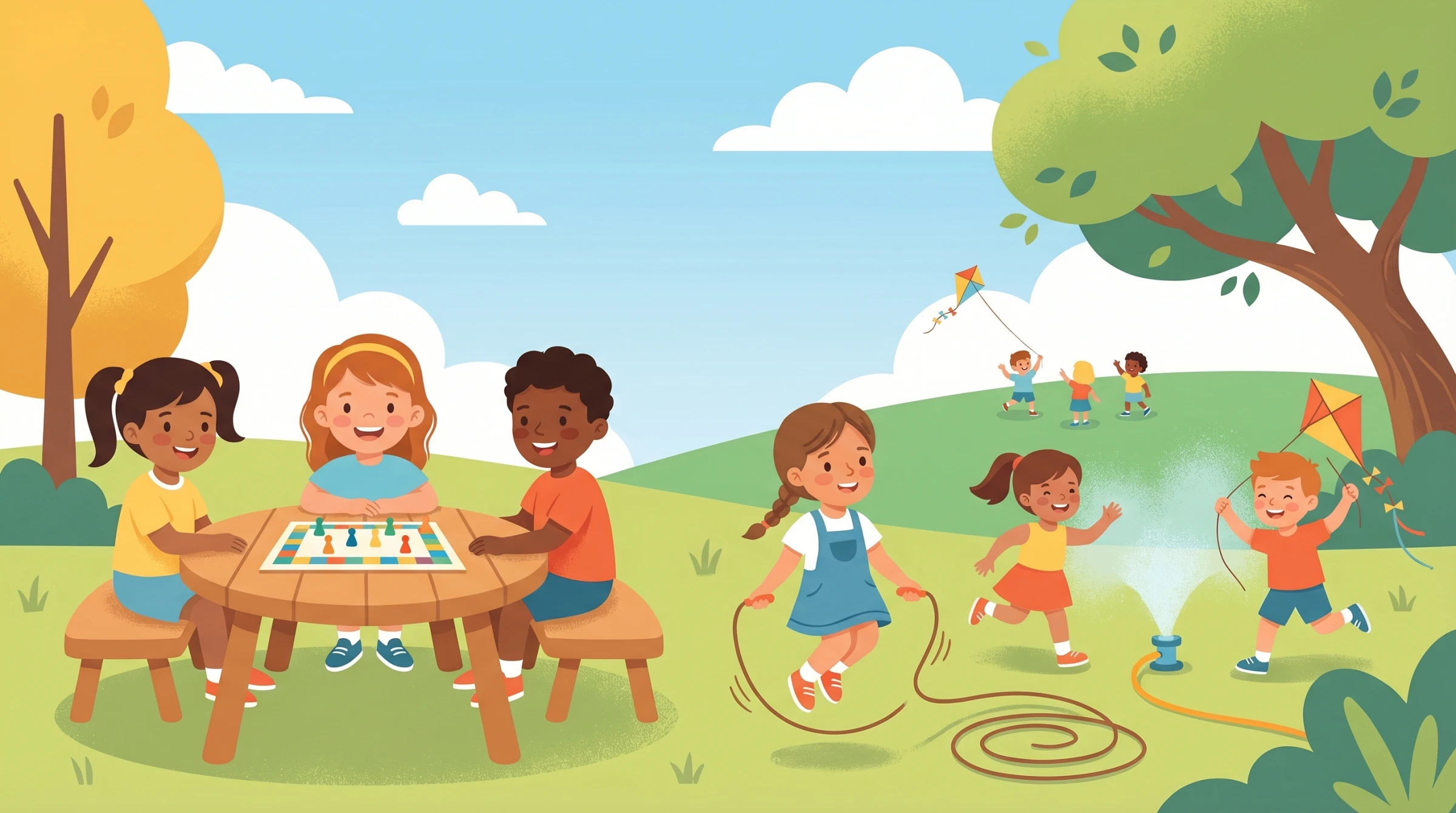
Summer is three months of possibility. It is also three months of "I'm bored" followed by a slow gravitational pull toward the nearest screen. You know how it goes. By week two, the tablet has become a fifth limb. But it does not have to be that way.
Here is the thing about screen-free summers: nobody is saying "never touch a screen for 90 days." That is unrealistic and, honestly, a little extreme. What works is having a list of alternatives that are genuinely more interesting than scrolling. When a kid has 45 things to choose from, the phone loses its monopoly on fun.
If you have been following the screen time conversation, you already know the data is not great. Average screen time for kids aged 8–12 hit 5.5 hours per day in 2025, far exceeding AAP screen time guidelines. Summer makes it worse because the usual structure disappears. No school bell. No homework. Just wide-open hours and a device that never runs out of content.
The antidote is not a lecture. It is a better option. Forty-five of them, actually.
We organized these into six categories so you can mix and match based on weather, mood, and how much energy you have left as a parent. Some are pure kid-driven activities. Some require an adult nearby. All of them beat another episode of whatever they are currently binge-watching.
What's Inside
- Outdoor Adventures (10 activities)
- Board Games & Puzzles (8 activities)
- Creative & Art Projects (8 activities)
- Kitchen Adventures (7 activities)
- Reading & Writing (6 activities)
- Life Skills Challenges (6 activities)
1. Outdoor Adventures (10 Activities)
The simplest screen-free strategy: get outside. Research confirms that outdoor play supports physical, cognitive, and emotional development. Fresh air does not compete with apps—it replaces the need for them. Most of these require zero equipment or stuff you already have.
🌱 Nature Scavenger Hunt
Make a list of 15–20 things to find: a feather, a smooth rock, something red, a Y-shaped stick, an ant carrying food. Hand the list to your kids and let them loose in the yard or a nearby park. They can check items off as they go—no phone needed, just a pencil and paper.
Ages 4–10🎨 Sidewalk Chalk Art
A box of sidewalk chalk costs two dollars and keeps kids busy for hours. Draw a hopscotch course, create a life-size self-portrait, or turn the entire driveway into a mural. Older kids can do chalk perspective art (the kind that looks 3D from a certain angle).
Ages 4–12🎊 Water Balloon Games
Fill a bucket of water balloons and invent games: water balloon toss (step back after each catch), water balloon baseball, or a target practice station with chalk circles on the fence. Best played in swimsuits. Best not played near open windows.
Ages 5–14🌳 Build a Fort From Sticks
Find a spot with fallen branches and build a lean-to shelter. This is engineering in disguise: which sticks go on the bottom, how to make it sturdy, where the doorway goes. Kids who do this will talk about "their fort" for weeks. Bring a tarp if you want it to actually be waterproof.
Ages 6–14⛺ Backyard Camping
Set up a tent in the backyard. That is it. Sleeping bags, flashlights, maybe a battery-powered lantern. Tell stories, look at stars, eat snacks. The bathroom is twenty steps away, so it is camping with training wheels. Perfect for a first "camping" experience.
Ages 4–14🐛 Bug Safari
Grab a magnifying glass and a notebook. Go outside and find as many different insects as possible. Draw them. Count their legs. Look up what they are when you get back inside (that is the one screen moment allowed). Kids who think bugs are gross will surprise you—curiosity usually wins.
Ages 4–10🌱 Plant a Garden
Even a few pots on a balcony count. Cherry tomatoes, sunflowers, and basil are nearly impossible to kill and grow fast enough for impatient kids to stay interested. Let them water daily and measure growth with a ruler. This is science class without the classroom.
Ages 4–14🏃 Obstacle Course
Use whatever you have: jump over the pool noodle, crawl under the lawn chair, run around the tree, balance on the garden hose. Time each run with a stopwatch. Kids will redesign the course twelve times and compete against their own records for an entire afternoon.
Ages 4–12⛅ Cloud Watching Journal
Lie on a blanket, look up, and draw what you see. That cloud looks like a dragon? Draw it. Write the date and weather. Over the summer, you end up with a strange and wonderful journal of sky pictures. This is the most peaceful activity on the list—use it after high-energy days.
Ages 5–10🗺 Neighborhood Treasure Map
Walk around your neighborhood together and note landmarks: the big oak tree, the blue mailbox, the house with the funny garden gnome. Then draw a treasure map at home, marking everything. Hide a small "treasure" (a snack, a dollar coin) and let another kid follow the map to find it.
Ages 6–122. Board Games & Puzzles (8 Activities)
Rainy day? Too hot? Board games are the original screen-free entertainment. Research in Frontiers in Psychology shows they boost cognitive skills like planning and flexible thinking. And they teach skills that apps claim to teach but mostly do not: patience, strategy, losing gracefully, and not flipping the board when your sister takes your last property in Monopoly.
This is exactly what Gen Alpha needs more of—face-to-face interaction with real stakes (even if the stakes are just bragging rights).
🎲 Classic Board Games Night
Monopoly, Clue, The Game of Life, Sorry. Pick one per evening and make it an event: snacks, scoreboard, maybe a silly trophy for the winner. Younger kids do great with Candy Land, Chutes and Ladders, or Hi Ho Cherry-O. The point is everyone at the same table, talking.
Ages 4–14🧩 Jigsaw Puzzles
Start a 500-piece puzzle on the dining table and work on it all week. No rush. Younger kids can do 50–100 piece puzzles independently. The beauty of a puzzle is that it just sits there, inviting you back. It is the anti-scroll: slow, satisfying, and genuinely completable.
Ages 4–14♟ Chess and Checkers
Checkers for ages 5–7, chess from 7 up. You do not need to be a grandmaster to teach the basics. Start with just the pawns, then add one piece at a time across several days. Chess teaches thinking ahead—a skill that transfers to everything from homework to real life decisions.
Ages 5–14🃏 Card Games
A single deck of cards supports dozens of games: Go Fish, War, Crazy Eights, Slapjack, Rummy. Teach your kids one new card game each week of summer. By August, they will have a repertoire that entertains them whenever friends come over. Uno counts too.
Ages 5–14🚀 Strategy Games
For older kids ready for more depth: Ticket to Ride, Catan (Junior version exists), Blokus, or Azul. These games require planning multiple moves ahead and adapting when plans fall apart. Perfect for the kid who says regular board games are "too easy."
Ages 8–14🤝 Cooperative Games
Pandemic, Forbidden Island, Outfoxed. In these, everyone wins or loses together. No fighting over who cheated. You work as a team against the game itself. This is gold for siblings who turn competitive games into World War III.
Ages 6–14🎲 Dice Games
Yahtzee, Farkle, or make up your own. All you need is five dice and a scoring sheet. Dice games teach basic probability and mental math without feeling like school. Quick rounds mean even short attention spans stay engaged.
Ages 6–14📝 Word Games
Scrabble (or Scrabble Junior for younger ones), Boggle, Bananagrams. These build vocabulary and spelling while feeling like play. For car trips: 20 Questions, I Spy, or the alphabet game. Zero equipment needed.
Ages 6–14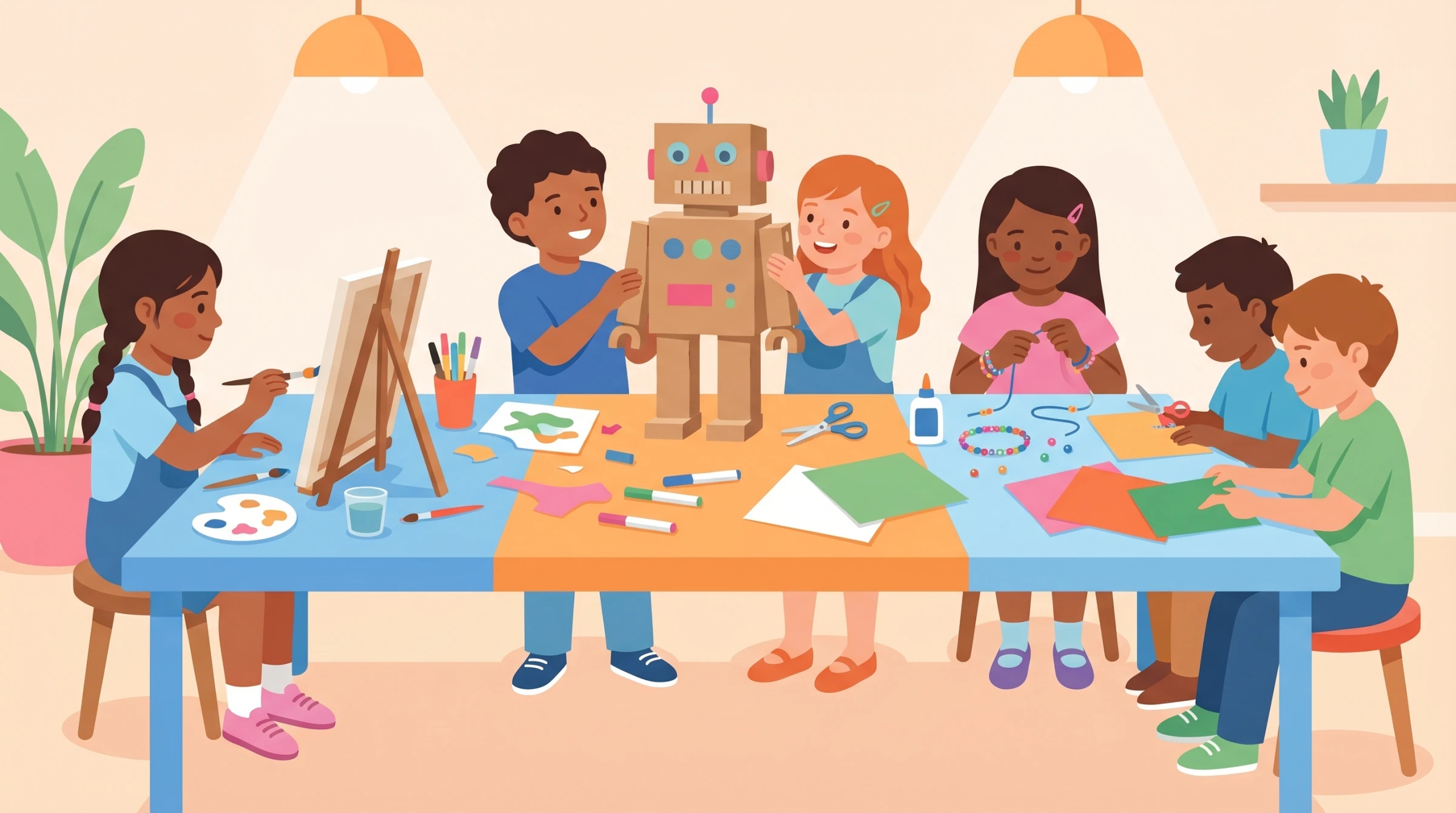
3. Creative & Art Projects (8 Activities)
Making things with your hands is the opposite of consuming content on a screen. When kids create, they enter a flow state that screens mimic but never truly deliver. The APA highlights creative activities as essential for brain development in children. Plus, they end up with something real to show for their time—not just a high score that resets tomorrow.
As we explored in our piece on raising creators versus consumers, the distinction matters more than most parents realize.
🌈 Tie-Dye Shirts
White t-shirts, rubber bands, and a tie-dye kit. Twist, wrap, squeeze, wait overnight, and unwrap to reveal something unique. The suspense of unfolding a finished shirt is genuinely exciting. Do this outside—unless you enjoy cleaning dye off the kitchen floor.
Ages 5–14📦 Build With Cardboard Boxes
Save delivery boxes for a week, then dump them in the living room with tape and markers. Spaceship. Castle. Robot suit. Store. The only limit is their imagination and your tolerance for cardboard debris. This can easily consume an entire day.
Ages 4–12💘 Friendship Bracelets
Embroidery floss and a few basic patterns from a book (yes, a book, not YouTube). Start with the simple chevron pattern, then progress to more complex designs. This teaches patience and fine motor skills. Kids can make bracelets for friends, which doubles as a social activity.
Ages 7–14🎨 Painting Rocks
Collect smooth rocks, paint them with acrylic paint, seal with clear coat. Make animals, patterns, inspirational words, or tiny landscapes. Leave painted rocks around the neighborhood for strangers to find. It is street art for the elementary school set.
Ages 4–12📖 Making a Comic Book
Fold printer paper in half, staple the spine, and you have a comic book. Kids create characters, write dialogue, draw panels. This combines writing and art in a format that does not feel like either. Even reluctant writers will fill pages when there are speech bubbles involved.
Ages 6–14🐥 Origami
Start with a paper crane or a jumping frog. Origami requires focus, precision, and following sequential steps—exactly the skills that screen time erodes. A pack of origami paper and a beginner book is all you need. The jumping frog is the gateway drug.
Ages 6–14🎨 Clay and Playdough Sculptures
Younger kids: homemade playdough (flour, salt, water, food coloring). Older kids: air-dry clay that hardens overnight and can be painted. Sculpt animals, bowls, miniature food, weird abstract shapes. It is tactile, meditative, and screen-incompatible (clay hands and touchscreens do not mix).
Ages 4–14🎨 Building a Marble Run
Use cardboard tubes, tape, and cardboard scraps to build a marble run on a wall or down a staircase. Engineering, physics, problem-solving, and the deeply satisfying "click-click-click" of a marble finding its way down. When it works on the first try, it feels like magic.
Ages 5–144. Kitchen Adventures (7 Activities)
Cooking is life skills disguised as fun. Measuring cups teach fractions. Timers teach time management. Following a recipe teaches reading comprehension. Studies also show that involving kids in cooking improves their dietary quality. And you get something to eat at the end, which is more than most educational activities can say.
🍪 Bake Cookies From Scratch
Not from a mix. From flour, butter, sugar, eggs. Let them measure, pour, stir, and shape. Yes, there will be flour on the floor. Yes, the first batch might be flat. That is how baking works. The reward of eating something you made yourself is powerful at any age.
Ages 4–14🍦 Make Homemade Ice Cream
The bag method: cream, sugar, and vanilla in a small ziplock bag, placed inside a larger bag filled with ice and salt. Shake for 10 minutes. It actually works. It is a science experiment that ends in dessert. Kids remember this one for years.
Ages 5–14🍕 Design a Pizza
Buy or make dough, set out toppings in bowls, and let each kid design their own pizza. They choose toppings, arrange them, watch it bake. Even picky eaters tend to eat food they designed themselves. The pizza might look chaotic. It will taste fine.
Ages 4–14🥦 Smoothie Bar
Set up a "smoothie station" with frozen fruit, yogurt, milk, honey, and spinach (sneak it in). Kids pick their ingredients, blend, pour, name their creation. The Banana Monster Blast or the Strawberry Spinach Surprise. Making a menu card is half the fun.
Ages 5–12🍋 Lemonade Stand
The classic summer business. Squeeze real lemons, make a sign, set up a table. This teaches basic math (making change), entrepreneurship (pricing), and social skills (talking to neighbors). Some kids will want to expand into cookies and snacks by day two. Let them.
Ages 6–12🍰 Decorate Cupcakes
Bake plain cupcakes, then set out frosting, sprinkles, candy, and food coloring. Decorating is the main event. Each cupcake becomes a tiny art project. This works great as a playdate activity—invite a friend over and double the creativity (and the mess).
Ages 4–12📖 Family Cookbook
Spend the summer collecting family recipes. Interview grandparents for their favorites. Kids write (or dictate) the recipes, draw pictures of the finished dishes, and assemble everything into a binder or stapled book. This becomes a keepsake. Start it in June, gift copies in December.
Ages 7–145. Reading & Writing (6 Activities)
Summer reading loss is real—kids who do not read over the summer start the new school year behind. Pediatrics research confirms that reading aloud and writing activities strengthen literacy and brain development. But "go read a book" is not exactly a thrilling proposition. The trick is making reading and writing feel like a choice, not a chore.
📚 Summer Reading Challenge
Set a goal: 20 books by Labor Day (or 10, or 30—adjust to the kid). Make a visual tracker on the wall. Every finished book gets a sticker or a mark. Throw in small rewards at milestones—a trip to the bookstore at book 10, a movie night at book 20. Libraries often run free summer reading programs too.
Ages 4–14✍ Write a Story
Give them a prompt: "You wake up and your dog can talk. What does it say?" or "You find a door in the back of your closet. Where does it lead?" Let them write as much or as little as they want. Illustrate it. Staple it into a booklet. Younger kids can dictate while you write.
Ages 5–14📝 Start a Journal
A summer journal does not have to be a diary. It can be a "weird things I noticed today" log, a drawing journal, or a record of daily adventures. The habit of daily writing, even just three sentences, builds a skill that compounds. Buy a notebook they actually like—the cover matters more than you think.
Ages 6–14✉ Pen Pal Letters
Find a cousin, a camp friend, or a friend who moved away. Write real letters on real paper with real stamps. Waiting for a reply teaches patience. Receiving a letter in the mailbox teaches that communication existed before group chats. This one is slow and wonderful.
Ages 7–14📰 Create a Family Newspaper
Assign roles: reporter, editor, cartoonist, photographer (instant camera or hand-drawn). Cover real family events: "Dad Burns Burgers Again" or "Cat Sleeps for 18 Hours: An Investigation." Print or handwrite copies for grandparents. Journalism for the under-12 crowd.
Ages 7–14📚 Book Club With Friends
Three or four kids read the same book, then meet at someone's house to talk about it with snacks. Keep it casual—no book reports. Just: "What was the best part? Which character would you be? What would you change about the ending?" Social reading is a totally different experience from reading alone.
Ages 8–146. Life Skills Challenges (6 Activities)
Summer is the perfect time to learn things that school does not teach. These activities build real-world competence—the kind that makes kids feel genuinely capable, not just "I beat level 47" capable. If you want more ideas on age-appropriate responsibilities, we have a full guide for that.
👚 Learn to Do Laundry
Sort colors, measure detergent, load the machine, move to dryer, fold. Walk through it together a few times, then let them run the show. By the end of summer, a 10-year-old can handle laundry start to finish. This is not just a chore—it is independence training.
Ages 8–14📦 Organize Your Room
Not "clean your room" (vague, overwhelming) but "organize your bookshelf by series" or "sort toys into keep, donate, trash." Give them categories and bins. Make before-and-after photos. The visible transformation is motivating. This is a one-day project that builds lasting habits.
Ages 6–14💰 Budget a Small Allowance
Give them five dollars a week (or whatever works for your family) and let them decide how to spend it. Saving up for something bigger teaches delayed gratification. Spending it all on candy teaches consequences. Both are valuable lessons. Track spending in a notebook together.
Ages 7–14🍴 Plan a Family Meal
Pick a night where a kid plans the entire dinner: choose the recipe, write the shopping list, help cook. They learn planning, budgeting, time management, and cooking all at once. Start simple (tacos) and work up to more complex meals (stir-fry, pasta from scratch). Expect some interesting flavor combinations.
Ages 8–14🧵 Sew a Button
A needle, thread, a button, and some fabric. Teach the basic four-hole button technique. It takes ten minutes to learn and lasts a lifetime. When their shirt loses a button at 25, they will not panic. They will just fix it. Start with practice fabric before moving to actual clothes.
Ages 8–14🩹 Basic First Aid Practice
How to clean a scrape, apply a bandage, use an ice pack, call for help. Practice on stuffed animals or willing siblings. Knowing what to do when someone gets hurt builds confidence and calm. This is knowledge every kid should have before middle school, and summer is the time to teach it.
Ages 7–14How to Actually Make a Screen-Free Summer Work
Having a list of 45 activities is one thing. Getting your kids to actually choose them over a screen is another. Here are four strategies that work.
1. Make it visible
Print this list and put it on the fridge. When a kid says "I'm bored," point at the fridge. Over time, they stop asking you and start checking the list themselves. Visibility is half the battle.
Better yet, turn the list into a checklist they can mark off. There is something deeply satisfying about crossing items off—for adults and kids alike. You can create custom summer activity checklists using Family Checklist and track progress for each kid separately.
2. Do not ban screens—replace them
A hard "no screens" rule creates rebellion. Instead, try: screens are available after you have done one activity from the list today. Most kids, once they start an activity, forget about the screen entirely. The barrier was just getting started.
3. Rotate categories
Monday: outdoor. Tuesday: board game. Wednesday: creative project. Thursday: kitchen. Friday: reading. Weekend: life skills or free choice. A loose structure prevents decision fatigue without feeling rigid.
4. Join them sometimes
You do not have to run every activity. But showing up for a board game night or building the cardboard fort together sends a message: these things matter. Your presence is the strongest endorsement of analog fun. Put your own phone down first—kids notice everything.
Quick Reference: Activities by Age
- Ages 4–6: Nature scavenger hunt, sidewalk chalk, backyard camping, painting rocks, playdough sculptures, cookie baking, smoothie bar, reading challenge
- Ages 7–10: All of the above plus: friendship bracelets, comic books, origami, card games, pen pal letters, family newspaper, budgeting, room organization
- Ages 10–14: All of the above plus: strategy board games, chess, tie-dye, marble run, family cookbook, laundry, meal planning, sewing, first aid
The Summer Checklist Approach
Here is an idea that ties everything together: create a "Summer 45" checklist. Print all 45 activities, pin it up somewhere visible, and challenge your kids to complete as many as possible before school starts. Not all 45—that is optional and ambitious—but set a goal that feels exciting.
Some families turn this into a friendly competition between siblings. Others make it collaborative: the whole family works together to hit 30 out of 45. Either way, it gives the summer a shape and a purpose beyond "survive until September."
If you want to track it digitally (ironic, yes, but practical), the Family Checklist app lets you create custom activity lists for each family member, track completions, and award points. You can build a "No-Phone Summer Challenge" checklist in about five minutes. The kids can check off activities themselves, see their progress, and earn rewards you define. It is the one screen moment that encourages all the non-screen moments.
One Last Thing
Nobody pulls off a perfectly screen-free summer. There will be rainy days where the TV goes on. There will be road trips where tablets keep the peace. That is fine. The goal is not perfection. The goal is that when your kids look back on summer 2026, they remember building a stick fort, making tie-dye shirts, and beating you at Monopoly—not which videos they watched.
Forty-five options. Zero screens needed. One pretty great summer ahead.
Related Articles
- The Screen Time Crisis: What the Data Actually Says
- Gen Alpha: The Case for an Offline Generation
- Consumer or Creator? Why It Matters How Kids Spend Screen Time
- 7 Chores 5-Year-Olds Actually Finish (Tested by 200 Real Families, 2026)
Build your No-Phone Summer checklist
Track screen-free activities for each kid. Points, progress, and zero nagging.
Get Family Checklist Free